Problem
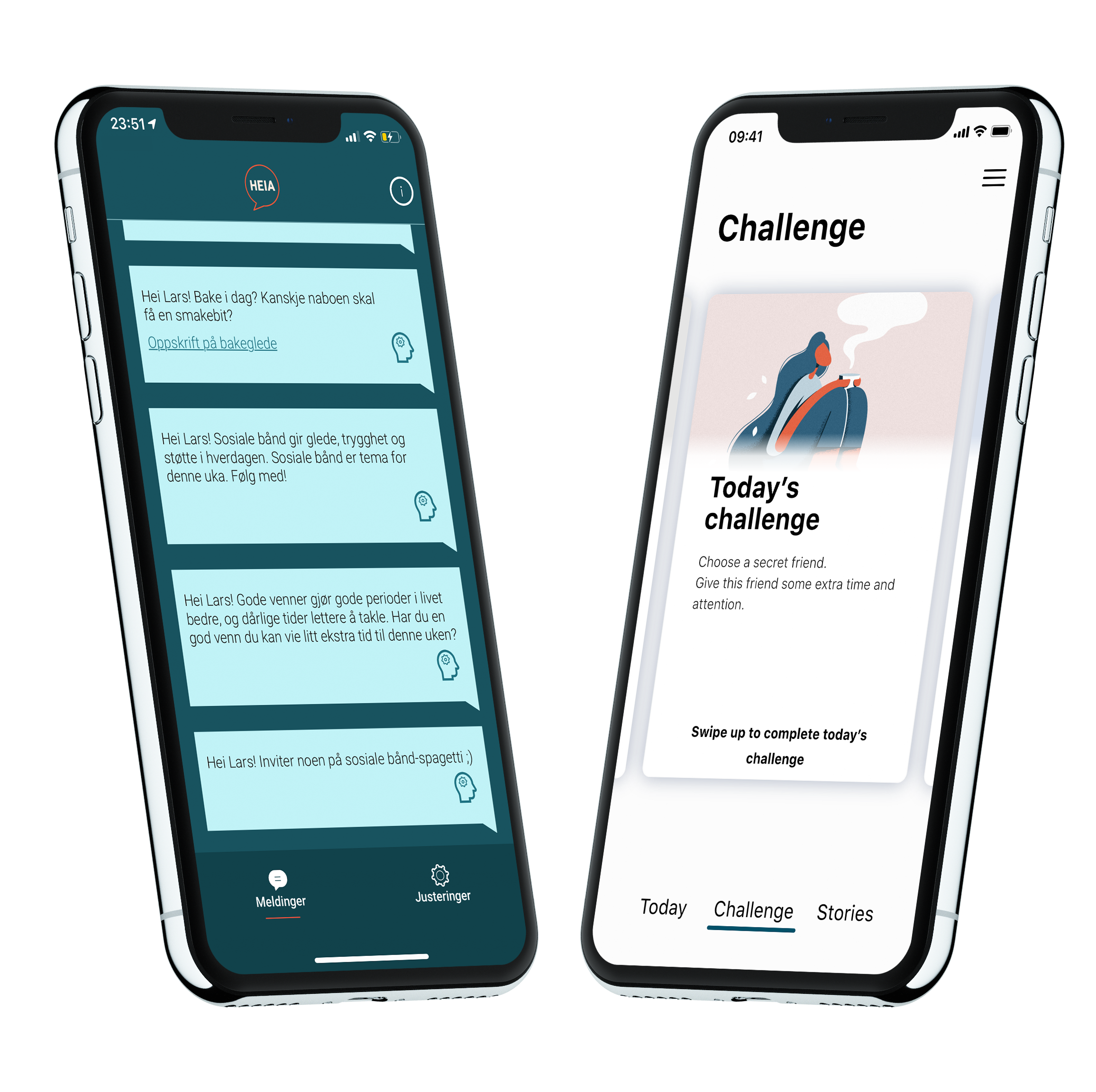
Despite strong public commitment to suicide prevention, existing mental health services often failed to meet users where they were. The systems were complex, fragmented, stigmatizing, and difficult to navigate, especially for people already in vulnerable states.
Key Challenges
- Mental health services designed around systems rather than human experience.
- High barriers to entry at moments of significant emotional distress.
- A lack of personalization and continuity across services.
- Communication that felt clinical, impersonal, or overwhelming.
Suicide prevention is not a single interaction but a long-term, emotionally complex journey. Existing digital services did not support that reality well enough.
Approach
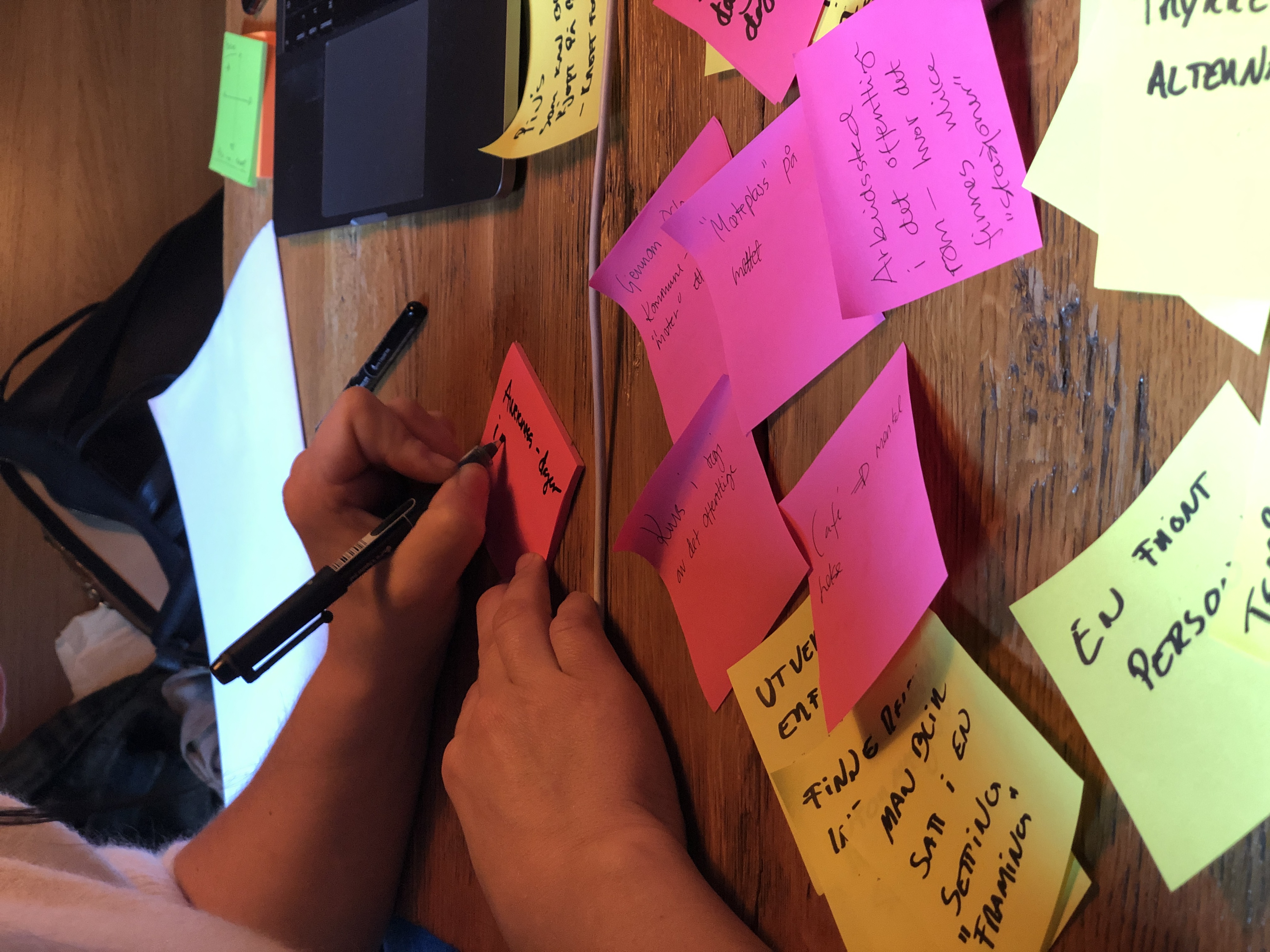
I combined design research, systems analysis, and human-centered principles to understand both the structural and emotional dimensions of mental health support. Rather than treating solutions as isolated products, I approached them as part of a broader support ecosystem.
Focus Areas
Systemic Analysis
I researched suicide prevention strategies and mapped existing digital and non-digital touchpoints.
User Journey Mapping
I analyzed user needs across moments of vulnerability, motivation, and recovery to identify friction points.
Ethical Frameworks
I developed design principles focused on empathy, dignity, and personal agency.
Strategic Concepting
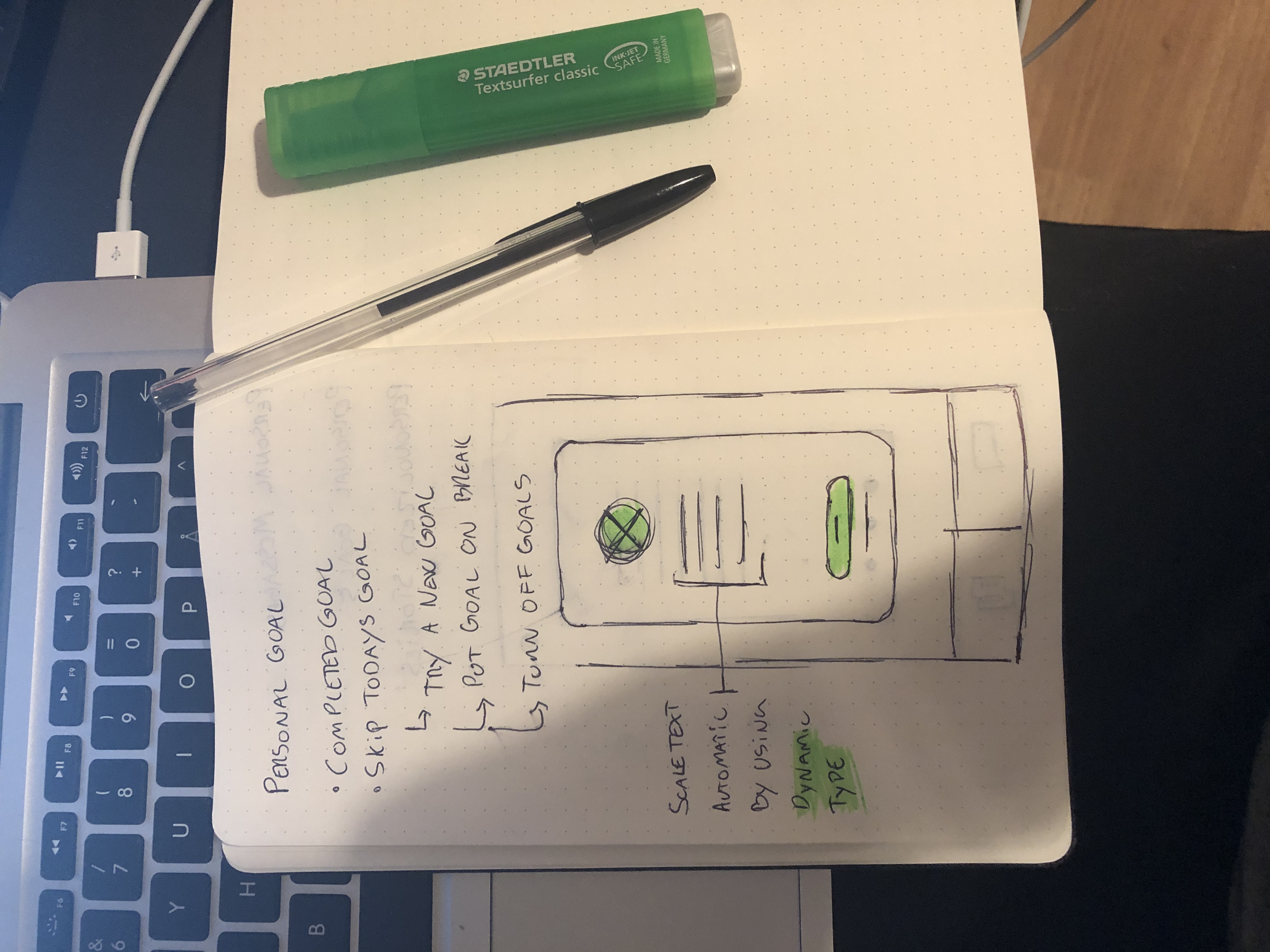
I prototyped alternative service models that focused on long-term engagement rather than only crisis intervention.
Solution
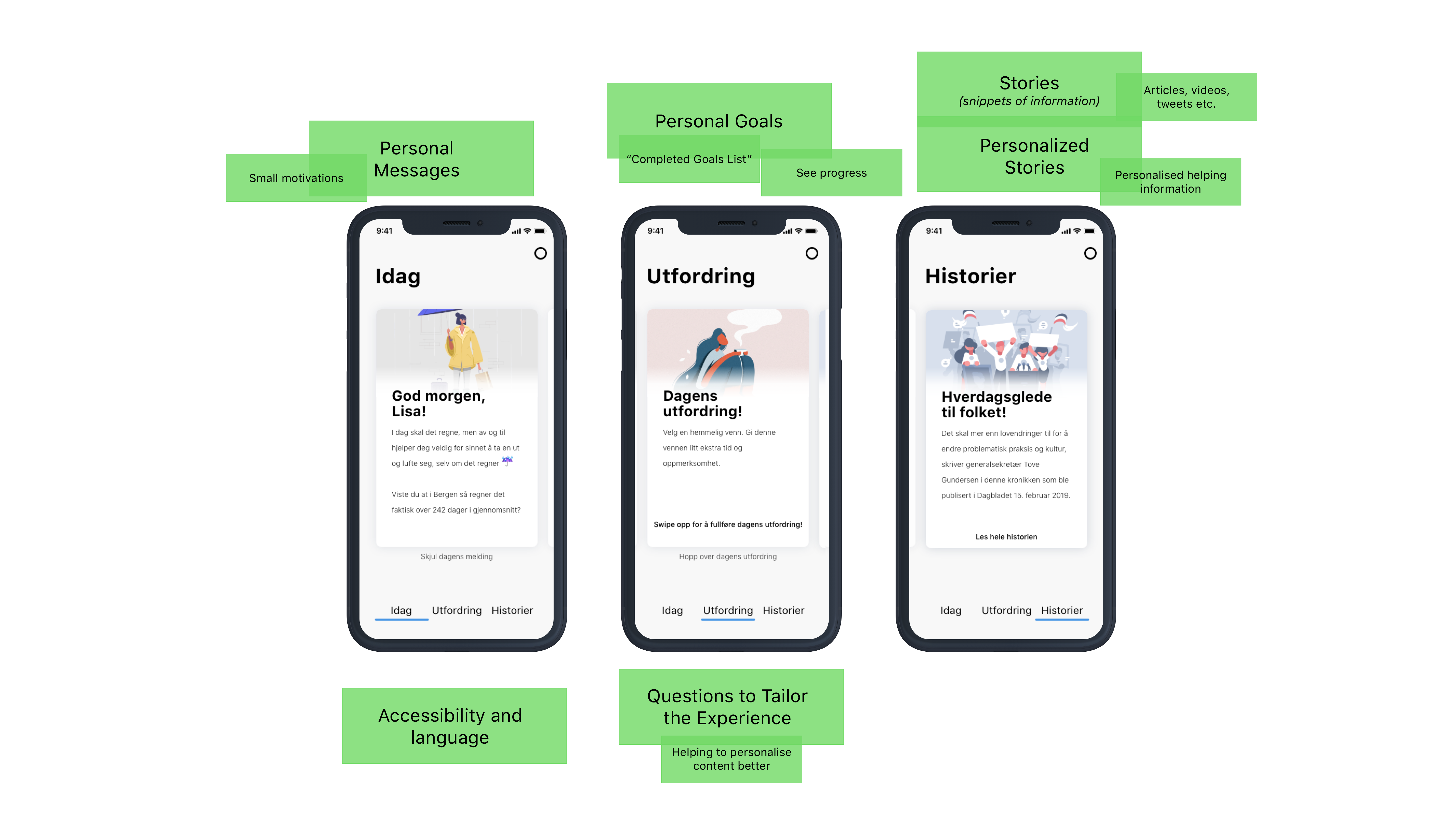
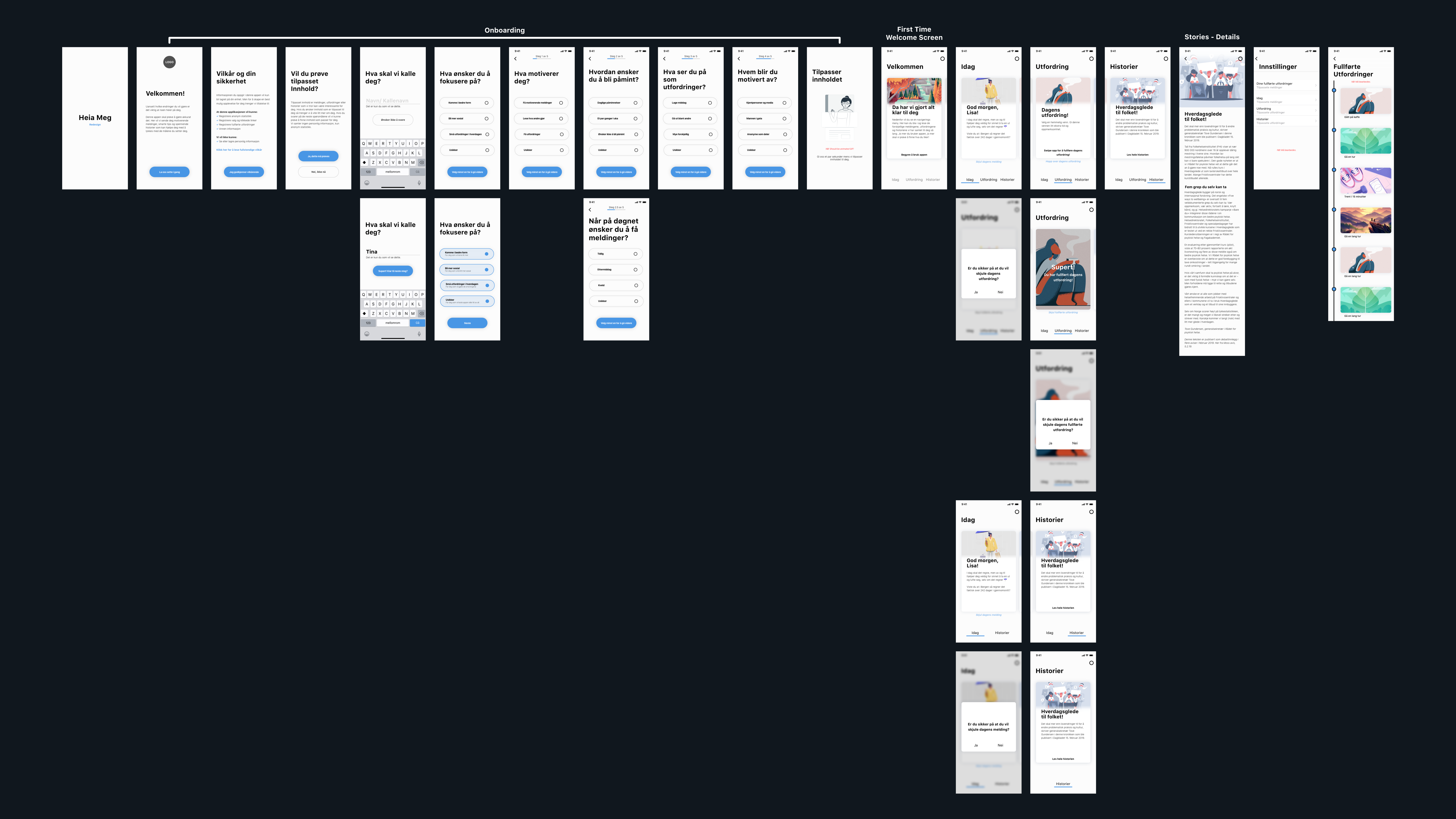
Using the principles and insights developed through research, I redesigned Heia Meg as a more human-centered mental health companion. The redesign showed how this framework could move existing services toward greater empathy, clarity, and user relevance.
Key Design Directions
-
Tone and Voice
A calmer, more supportive tone that reduces emotional friction. -
Agency
Personalized goals and feedback instead of generic messaging. -
Cognitive Load
Clear, simple interactions designed for users under cognitive and emotional strain. -
Continuity
Design patterns that encourage reflection and self-efficacy. -
Safety
Respectful handling of sensitive content without alarmism or moral pressure.
The solution focuses on supporting users in everyday moments, not just during crises, recognizing mental health as an ongoing process.
Outcome
Impact
The project demonstrated how human-centered design can translate national health strategies into more effective digital services. It provided a practical framework for improving mental health services beyond a single app and highlighted systemic design opportunities across public health policy and service delivery.
Reflection
This project shaped my long-term approach to design. It reinforced the importance of responsibility and ethics when designing for vulnerable users, and it strengthened my ability to work in complex, emotionally charged problem spaces.